Protecting Disaster Responders from Respiratory Hazards
The Ask: Our clients with the National Institute of Environmental Health Sciences (NIEHS) Worker Training Program (WTP) fund organizations that deliver disaster preparedness and response training to workers and communities across the country. Trainers from these organizations expressed a need for voluntary respiratory protection guidance to protect workers and volunteers who participate in disaster cleanup but do not have mandated respiratory coverage, or whose employers do not provide or authorize personal protective equipment.
The Solution: MDB worked with an occupational health and safety expert to develop a respiratory guidance document and tool. The expert solicited input from a panel of WTP-funded organizations, academics, and industry professionals with experience in respiratory protection to participate in interviews and provide feedback about the structure and scope of the tool. Based on iterative review and feedback from the panel, our team worked to develop the outline, content, and graphics for the tool.
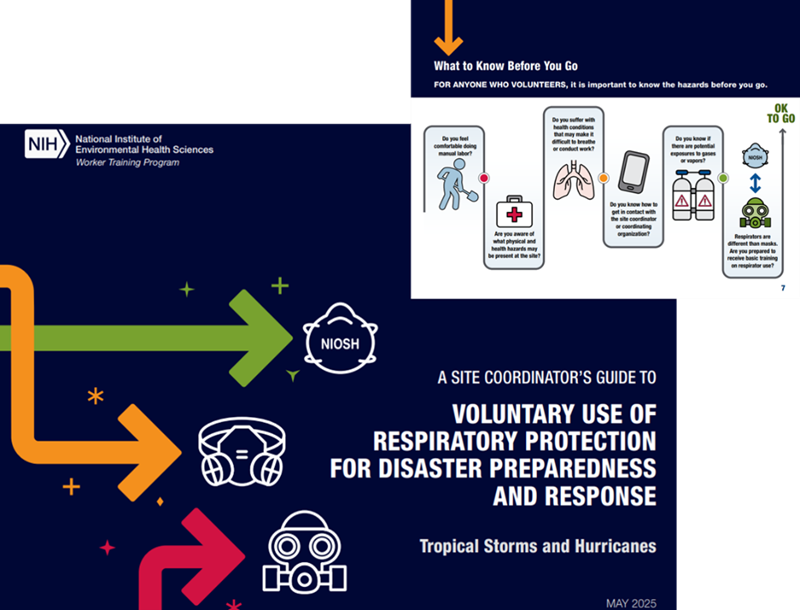
Notable Outcomes: The final tool, “Site Coordinator’s Guide to Voluntary Use of Respiratory Protection for Disaster Preparedness and Response,” is targeted toward laypeople, like volunteers, who are responding to tropical storms and hurricanes. The tool offers a resource for disaster response site coordinators who oversee workers and volunteers who may be included in a voluntary respiratory use program. The tool is comprised of standalone one-page sheets to allow each page to be disseminated as their own documents or as a whole packet. It provides clear, concise information that supervisors can use to advise their decision to implement voluntary respiratory protection, ultimately keeping disaster workers safe as they complete disaster cleanup tasks.